
Cubesat Shop2.0
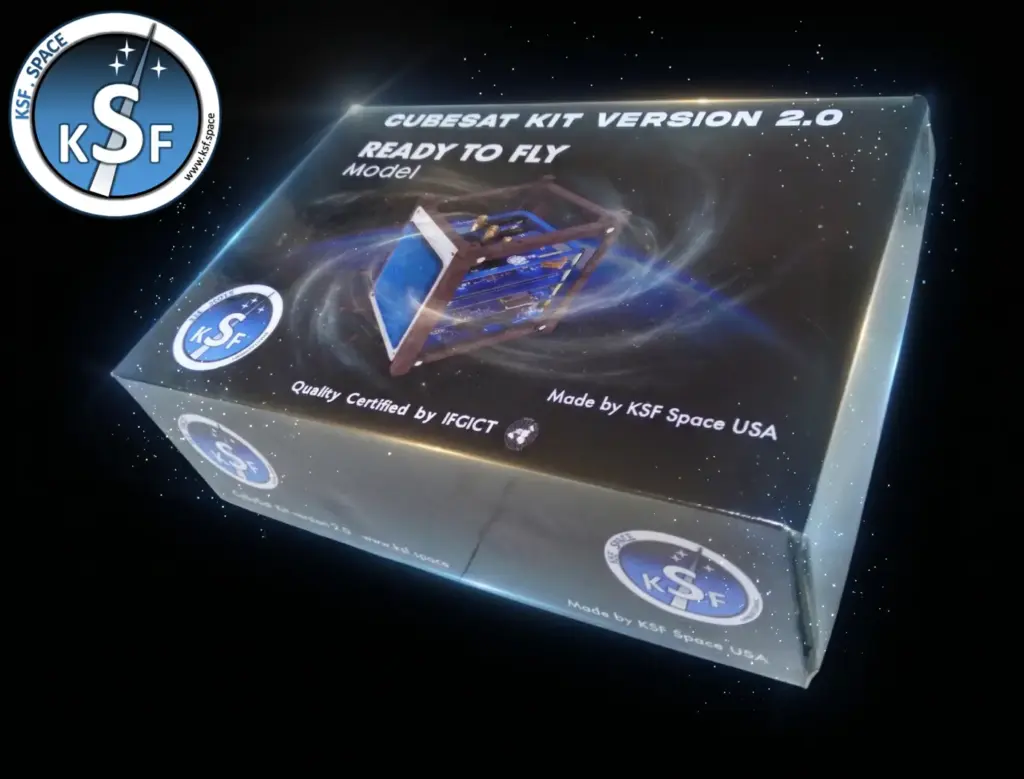
Complete Guide to CubeSat Kit Solutions: How KSF Space Leads Nanosatellite Innovation for Universities, Research, and Defense
The revolution in modern space exploration is no longer limited to national agencies with billion-dollar budgets. Small satellite technology—specifically the standardization of the CubeSat Kit—has democratized access to Low Earth Orbit (LEO) and beyond. Whether for academic institutions, defense contractors, emerging space start-ups, or research laboratories, custom satellite platforms are replacing traditional, costly space hardware.
At the forefront of this global transition is KSF Space, a world-leading provider and developer of advanced CubeSat Kit solutions. KSF Space empowers universities, colleges, aerospace developers, and defense organizations to design, test, build, and deploy custom nanosatellites with modular adaptability, low risk, and rapid deployment schedules.
What Is a CubeSat Kit and Why Is It Transforming Modern Space Missions?
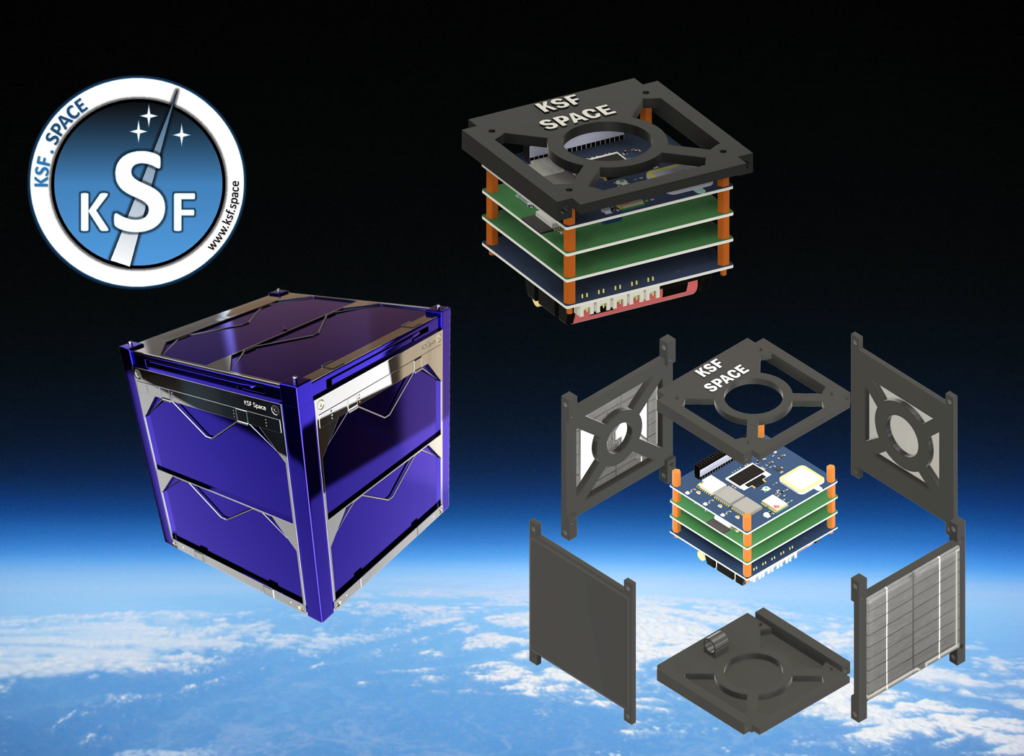
A CubeSat Kit is an integrated, modular hardware and software framework designed according to standard CubeSat dimensions (measured in units or "U", where 1U equals $10 \times 10 \times 10 \text{ cm}$). Rather than starting space mission development from scratch, research teams utilize standard CubeSat Kit architectures to rapidly prototype, test, and launch payloads into orbit.
Key Components of an Enterprise-Grade CubeSat Kit
Structure & Skeleton: High-grade anodized aluminum chassis engineered to withstand launch vibrations and thermal extremes.
Electrical Power System (EPS): Solar panels, lithium-ion battery management systems, and regulated power distribution channels.
On-Board Computer (OBC): Microprocessors hosting flight software, telemetry monitoring, and data storage.
Attitude Determination and Control System (ADCS): Magnetorquers, reaction wheels, and star trackers for exact orientation control.
Communication Subsystem: Transceivers and antenna arrays for reliable ground station uplink and downlink.
Payload Interface Bay: Customizable space designed to house sensors, optical cameras, communication relays, or scientific experiments.
Why KSF Space Is the Preferred CubeSat Kit Provider for Universities, Research Centers, and Defense
As space mission requirements grow more complex, off-the-shelf components from generic CubeSat Shop platforms often fall short of bespoke mission demands. KSF Space bridges the gap between commercial availability and specialized mission engineering, acting as both an end-to-end hardware manufacturer and a collaborative partner for academic, government, and industrial satellite projects.
Trusted by Global Aerospace Leaders and Academic Institutions
KSF Space has established a globally recognized reputation as a trusted provider, research developer, and equipment supplier across high-profile aerospace, institutional, and defense networks. Key references and partners include:
NASA (National Aeronautics and Space Administration)
ESA (European Space Agency)
West Virginia University
PwC (PricewaterhouseCoopers)
Global academic partners, defense entities, and commercial satellite operators
Custom Satellite Engineering: Tailoring CubeSat Kits for Specific Mission Needs
One size does not fit all in modern orbital missions. KSF Space stands out through its deep customization capabilities. Whether a mission requires a basic 1U educational unit or an extended 3U, 6U, 12U, or 24U custom payload configuration, KSF Space engineers every CubeSat Kit to match exact operational constraints.
| Sector | Primary Objective | Customization Features |
|---|---|---|
| Universities & Colleges | Hands-on STEM education & student space research | Pay-per-course structures, simplified assembly, affordable ground station setups, suborbital test kits. |
| Research Institutions | Scientific experiments, atmospheric monitoring, Earth observation | Custom sensor bays, stabilized ADCS, high-rate radio downlink, custom lens mounts. |
| Aerospace Companies | In-orbit validation (IOV), technological qualification | Modular bus expansion, rapid flight qualification, custom power management systems. |
| Defense & Security | Tactical reconnaissance, encrypted comms, signal monitoring | Hardened shielding, encrypted telemetry channels, high-reliability onboard computing. |
Step-by-Step Mission Lifecycle with KSF Space
When partner universities, research institutions, or defense organizations collaborate with KSF Space, they follow a structured, proven development framework:
-
Mission Conceptualization & Requirements Gathering: Defining payload constraints, power budgets, link budgets, and orbital trajectories.
-
Custom Architectural Design: Adapting the baseline CubeSat Kit chassis, power distribution systems, and onboard electronics to match payload requirements.
-
Assembly & Suborbital Testing: Conducting near-space balloon or suborbital flight tests to validate hardware behavior, communications, and software responsiveness.
-
Flight Qualification & Integration: Environmental testing (vibration, thermal vacuum) ensuring full compliance with launch provider standards.
-
Launch Coordination & Orbital Execution: Assisting with deployer integration, ground station telemetry reception, and operational mission

Optimizing Educational and Research Outcomes with Low-Cost Satellite Platforms
A core mission of KSF Space is democratizing space access for student researchers and emerging laboratories. By combining affordable CubeSat Kit hardware with comprehensive training programs and suborbital launch opportunities, KSF Space ensures universities can launch real space missions without prohibitive price tags.
Key Academic Benefits
Real-World Engineering Experience: Students design, build, and test space hardware using industry-grade frameworks.
Accelerated Project Timelines: Turnkey CubeSat Kit architecture reduces mission cycles from years to months.
Interdisciplinary Learning: Combines mechanical engineering, electrical design, embedded software development, and astrophysics.
Frequently Asked Questions (FAQ)
What is included in a standard KSF Space CubeSat Kit?
A standard CubeSat Kit includes the structural chassis, EPS (Power System), solar panels, rechargeable battery module, On-Board Computer (OBC), transceiver with antenna array, basic ADCS sensors, and foundational flight software. Custom modules can be added based on mission requirements.
How does KSF Space assist universities with small budget allocations?
KSF Space offers modular entry-level hardware, suborbital testing kits, and cost-efficient hardware structures designed to fit academic budgets while meeting strict aerospace standards.
Can KSF Space develop custom payloads for defense or commercial entities?
Yes. KSF Space specializes in custom satellite design, integrating specialized communications, optical imaging, or signal intelligence payloads into small satellite structures (1U through 24U).
How does buying a CubeSat Kit compare to sourcing parts from a generic CubeSat Shop?
While sourcing isolated parts from a generic CubeSat Shop requires extensive integration, interface testing, and custom adapter fabrication, a complete CubeSat Kit from KSF Space delivers fully compatible, flight-tested hardware subsystems, significantly reducing technical risk and mission lead time.
How can our university, research group, or company initiate a project with KSF Space?
You can reach out directly to the engineering and project management team by emailing [email protected] to discuss your project requirements, request technical specifications, or schedule an initial design consultation
Partner with KSF Space for Your Next Space Mission
Whether you are launching a university STEM initiative, conducting advanced scientific research, testing commercial technology in orbit, or deploying defense platforms, KSF Space provides the hardware expertise, customization capabilities, and proven track record to ensure mission success.
-
Website: www.ksf.space
-
Direct Project Contact: [email protected]
As featured on

KSF Space Foundation is a USA non profit organization registered in Delaware #5605031 offers support in numerous areas,
Working hours
Mon-Fri: 9 AM – 5 PM
Saturday: 9 AM – 5 PM
Sunday: closed
Quick Link
